Market Desk Roundup
Markets react to different data and news constantly. For long-term investment success, you'll need to manage expectations and emotions. It helps to keep the daily noise and headlines in perspective by looking beyond the moment.
In the near term, policy uncertainty remains high as investors continue to react to trade policy and now the prospects of a tax bill.
Key Takeaways through May 22, 2025 (1 minute read)
- Policy uncertainty remains high, as the White House unveiled sweeping tariffs and then paused a portion of the tariffs for 90 days. Markets received immediate relief, but consumers and business still face significant uncertainty.
- Stocks recovered their -10% plunge as trade tensions eased, with mega cap tech stocks and the Growth factor leading the way. The S&P 500 ended April unchanged, despite intra-month volatility.
- The Fed remains patient, balancing inflation risks and economic uncertainty. Markets expect the first rate cut in June, with a total of four cuts now forecasted for 2025.
- Soft and hard economic data are diverging, with the former signaling weaker growth and the latter remaining solid as demand gets pulled forward ahead of tariffs.
- Signs of a slowdown are already reflected in asset prices, but given the uncertainty and 10% baseline tariffs still in effect, valuations are relatively expensive. We see the eventual resolution of tariff uncertainty, whenever and whatever that may be, as already priced into stocks.
Key Market Themes
- Washington Policy Uncertainty Continues to Create Market Volatility. Policy uncertainty remains a major market theme. In early April, the administration unveiled sweeping tariffs, triggering a selloff and escalating trade tensions. However, tensions eased throughout the month, with recent headlines trending toward de-escalation. The 90-day pause provided the market with immediate relief, but uncertainty remains high for businesses making long-term decisions. A blanket 10% tariff is still significant, something that is getting overlooked given the initial proposed rates. The U.S. economy could avoid a recession under 10% baseline tariffs, but it would still be a big shock to the global economy and financial system.
- Has the Market Priced in Enough of a Slowdown? The market isn't pricing in a full recession, but the ICH shows it has priced in some slowdown risks. Earnings estimates have been revised lower, and valuation multiples have declined. Corporate credit spreads are wider, and the VIX remains elevated. Investor sentiment is weaker, and positioning is lighter. The key question is whether these adjustments are enough, which is difficult to judge given the high degree of policy uncertainty and the potential global economic impact. Two data points suggests enough downside isn't priced in: both the S&P 500 and 10-year Treasury yield ended April unchanged (i.e., back at pre-Liberation Day levels).
Market Performance Recap
- Stocks Erase Early-Month Selloff as Trade Tensions Ease. Stocks sold off sharply in early April after the White House unveiled sweeping tariffs. The S&P 500 fell over -10% in the first week, but after the administration paused tariffs and trade tensions eased, it rebounded to finish the month with a loss of less than -1%. The stock market rally was top-heavy, with the Growth factor and Nasdaq 100 leading. Riskier equities, such as High Beta, also staged a strong comeback, while the S&P 500 Equal Weight, High Dividend, Value, and Small size factors underperformed. Technology was the top-performing sector, with most sectors trading flat to slightly lower. Energy was the exception and returned -13.9% as oil plunged over -17%. Meanwhile, gold surged to a record high amid increased volatility and policy uncertainty, and the U.S. dollar continued to weaken.
- International Continues to Outperform. Developed and Emerging markets outperformed the S&P 500 for a 3rd consecutive month. Developed gained over +3.5%, with broad strength across Europe and developed Asia as the U.S. dollar weakened. Emerging was flat as China's -5% return offset gains in broader Emerging Asia and Latin America. April's returns suggest capital continues to rotate out of the U.S. and into global markets. It's an investment theme we discussed in the April Strategy Snapshot, with potential implications for global financial markets in the coming quarters.
- Bonds End the Month Flat Despite Intra-Month Volatility. The heatmap in ICH Figure 47 shows that Treasury yields experienced significant volatility as the market navigated tariff headlines, inflation risks, and economic uncertainty. The front and mid sections of the yield curve declined in anticipation that the Fed will resume its rate-cutting cycle. The back end of the yield curve initially declined but ended the month slightly higher, causing Long Duration Treasury bonds to underperform. In the corporate bond market, there was limited return dispersion. Rising yields on the back end of the curve were a headwind for investment grade, while high-yield was held back by credit spread expansion.
Fed Policy and Interest Rate Outlook
- Fed Holds Steady as it Balances Inflation Risk & Economic Uncertainty. The Fed remains on hold as it faces a difficult balance between inflation risks and economic uncertainty, both tied to tariff and trade uncertainty. Given the delicate balancing act, we expect the central bank to wait for hard data to deteriorate before it acts. This approach is consistent with the Fed’s historical actions, which often leave it behind the curve and too late to cut. We suspect that will be the case again as it waits for actual weakness, which could ultimately lead to deeper cuts.
- Market's Rate Cut Forecast is More Dovish Than Fed. Based on Fed funds futures, the market expects four rate cuts in 2025, with two final cuts in first half of 2026. Here’s the projected timeline: there’s a less than 10% chance of a cut next week, followed by a greater than 60% chance of a cut at the next three meetings (6/18, 7/30, and 9/17). The market expects the Fed to hold rates steady in late October before cutting one final time in December. The market’s forecast is more dovish than the Fed, which, at its mid-March update, expected only two cuts this year. The decline in the front end of the yield curve prices in the expected rate-cutting cycle. We maintain our Long Duration OW (initiated on 1/1/2025) based on the view that the back end of the curve doesn’t price in the potential for deeper rate cuts, instead pricing in inflation, increased Treasury bond auction sizes, and fiscal deficit concerns.
Investor Sentiment and Positioning.
- Sentiment Weakens & Investors Reduce Exposure. Investor sentiment deteriorated and positioning deleveraged during April's market volatility. Our U.S. Investor Sentiment Indicator (USSI) has fallen to the 29th percentile, a decline but not enough for a reliable contrarian signal. Asset manager positioning in S&P 500 futures continues to decline, dropping from the 100th percentile at the end of 2024 to the 54th today. Similar to USSI, the decline in asset manager positioning isn't enough for a reliable contrarian buy signal. U.S. weekly equity flows have also slowed since late 2024, although there has been aggressive dip buying in recent weeks that coincides with positive trade developments.
- Selloff Inflicts Technical Damage, But Recovery Leaves Market Overbought. The S&P 500 suffered significant technical damage in April and now trades below its 50- and 200-day moving averages with multiple price gaps on the chart. the Market Desk U.S. Risk Demand Indicator (USRDI) only recently turned positive after being negative at -0.90 and decreased further during the month of April. The Market Desk U.S. Breadth Indicator (USBI) is weak and sits at a very low level by historical standards, signaling the potential for continued volatility in the coming months. Despite the technical damage and weak breadth, our U.S. Technical Indicator (USTI) shows the S&P 500 is overbought on a near-term basis after recovering nearly all its losses. Our base case is the market remains range-bound with elevated volatility until there is clarity. News volatility makes it risky to short, while technical damage and overhead resistance limit upside potential.
Corporate Earnings and Valuations
- 2025 Estimates Continue to Trend Lower. Since the start of the year, analysts have lowered earnings revisions for the next five quarters. Most of the negative revisions occurred in April, coinciding with tariff announcements and Q1 earnings season. Overall revision breadth remains weak, with downward revisions outpacing upward revisions. The earnings outlook is highly uncertain, primarily due to policy risks and tariffs. A weaker U.S. dollar and lower oil prices could benefit earnings. However, consumer and business confidence are weak, and leading data such as regional Fed surveys and PMIs are slowing. The Market Desk quantitative S&P 500 Earnings Indicator (USEPS) which uses macro data to forecast the next 12 months is in line with the consensus estimate, but both are rolling over as soft data deteriorates. The question is whether hard data will weaken next.
- Valuations Have Declined But are Still Elevated Compared to History. The S&P 500’s next 12-month (NTM) P/E multiple fell to 18x in early April but has since rebounded to 20x. For context, the S&P 500’s median NTM P/E multiple over the last 20 years was approximately 16x. The gap shows the stock market isn’t priced for a significant slowdown or recession, but it’s important to keep in mind that valuations aren’t a reliable tool for timing the market. Recent trends, such as negative earnings revisions, wider credit spreads, and a rising VIX, justified the decline in valuations. Without improvement in those areas, it’s difficult to see valuation multiples rise.
Economic Trends
- Soft Economic Data Diverges from Hard Data, Signaling a Slowdown. Recent economic data shows a widening gap between soft and hard data, making it difficult to gauge the U.S. economy’s health and direction. Soft data, such as business and consumer confidence surveys, regional Fed surveys, and PMIs, warn of a deteriorating outlook. In contrast, hard data has yet to show meaningful signs of weakness, with some areas even improving as tariffs pull forward demand. The Conference Board’s composite indices highlight the split: the Leading Economic Index posted its biggest monthly decline since October 2023, while the Coincident Index continues to rise, suggesting current activity is holding up well. Meanwhile, the Lagging Index remains volatile, offering little clarity on the direction or sustainability of growth.
- Markets are Trading on Headlines in the Absence of Reliable Information. With policy driving markets, it’s not worth spending too much time trying to forecast earnings or the economy. The range of potential policy and economic outcomes is wide, and the data is difficult to analyze as tariffs pull forward demand while also creating uncertainty. It’s unclear whether the soft data is an overreaction to uncertainty or a warning of what’s to come. Economic data, earnings, and corporate fundamentals will matter again once the policy outlook stabilizes, but for now, markets are moving on headlines and speculation based on incomplete information.
Market Outlook
- Expect Continued Volatility Until Policy Uncertainty Subsides. The market continues to cycle through narratives amid policy uncertainty and volatility. The trade war tension has eased, with headlines skewed toward de-escalation rather than escalation. Easing tensions allowed the S&P 500 to recover nearly all its -10% plunge from early April. The next phase of policy uncertainty will be to determine if financial markets have priced in too much, too little, or the appropriate amount of change and disruption into forward estimates.
- Our View — Trade Resolution is Already Priced into the Market. Signs of a slowdown are already reflected in asset prices, including negative EPS revisions, lower valuations, wider credit spreads, a higher VIX, weaker sentiment, and reduced leverage. However, given the uncertainty and 10% baseline tariffs still in effect, valuations are relatively expensive as the market anticipates the endgame. Our view is that market prices reflect a minor slowdown with a relatively quick resolution, not a sustained slowdown. Market Desk analysts see the eventual resolution of tariff uncertainty, whenever and whatever that may be, as already priced into stocks today.
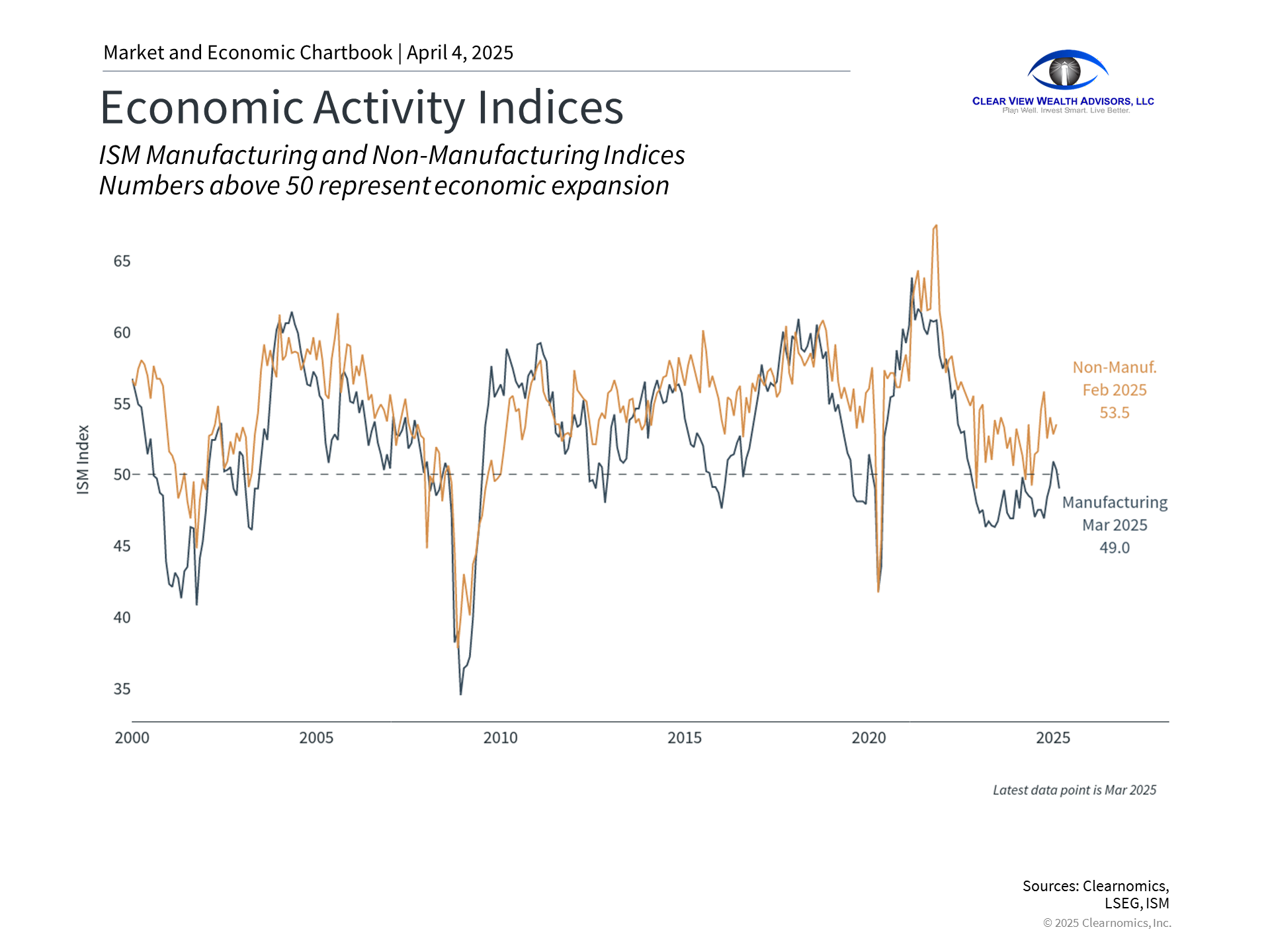 |
One of the many data points considered for the possible direction of stock and bond markets is from underlying economic activity. Both the ISM manufacturing and non-manufacturing indices provide a hint of the direction of economic activity.
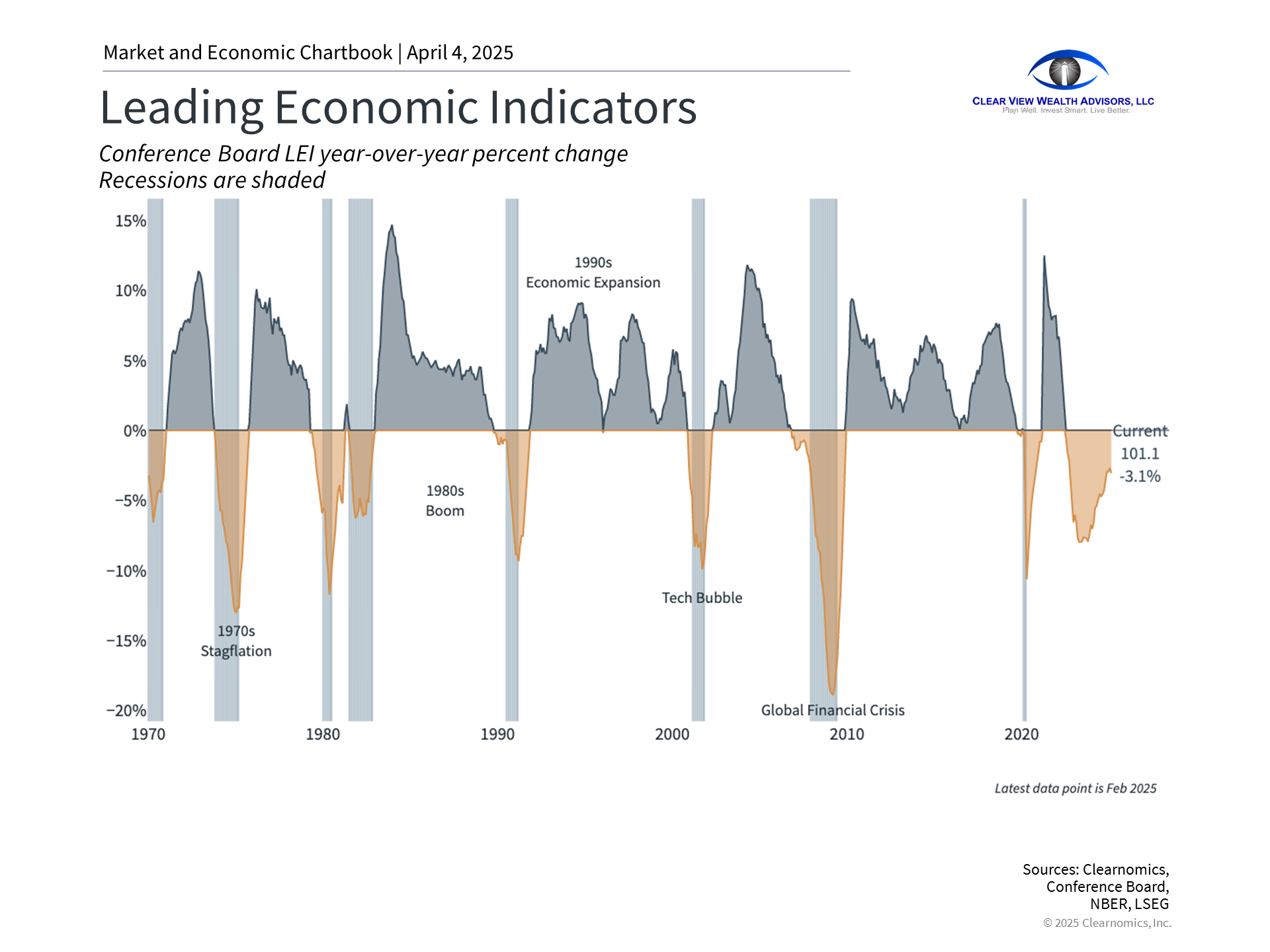 |
The Conference Board's proprietary LEI models are based on multiple data sets to capture the broad range of economic activity. Generally, this indicator has been fairly accurate.
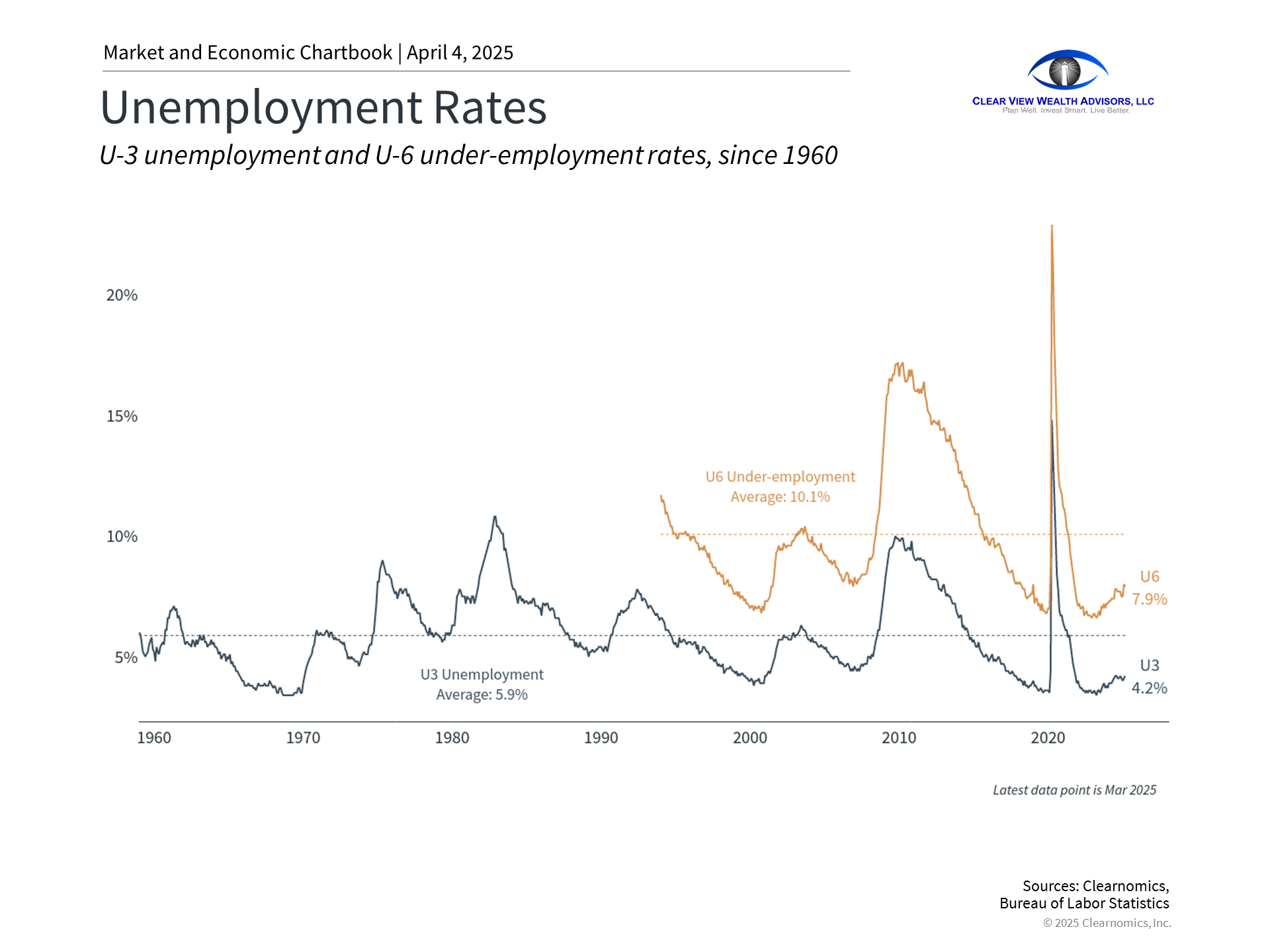 |
One of the key data points indicating recession is a rise in unemployment (U-3). Increases in U-3 can be predictive of slowing economic activity. Likewise, increases in under-employment (U-6) can indicate reductions in full-time hours available through employers and the need for workers to generate income.
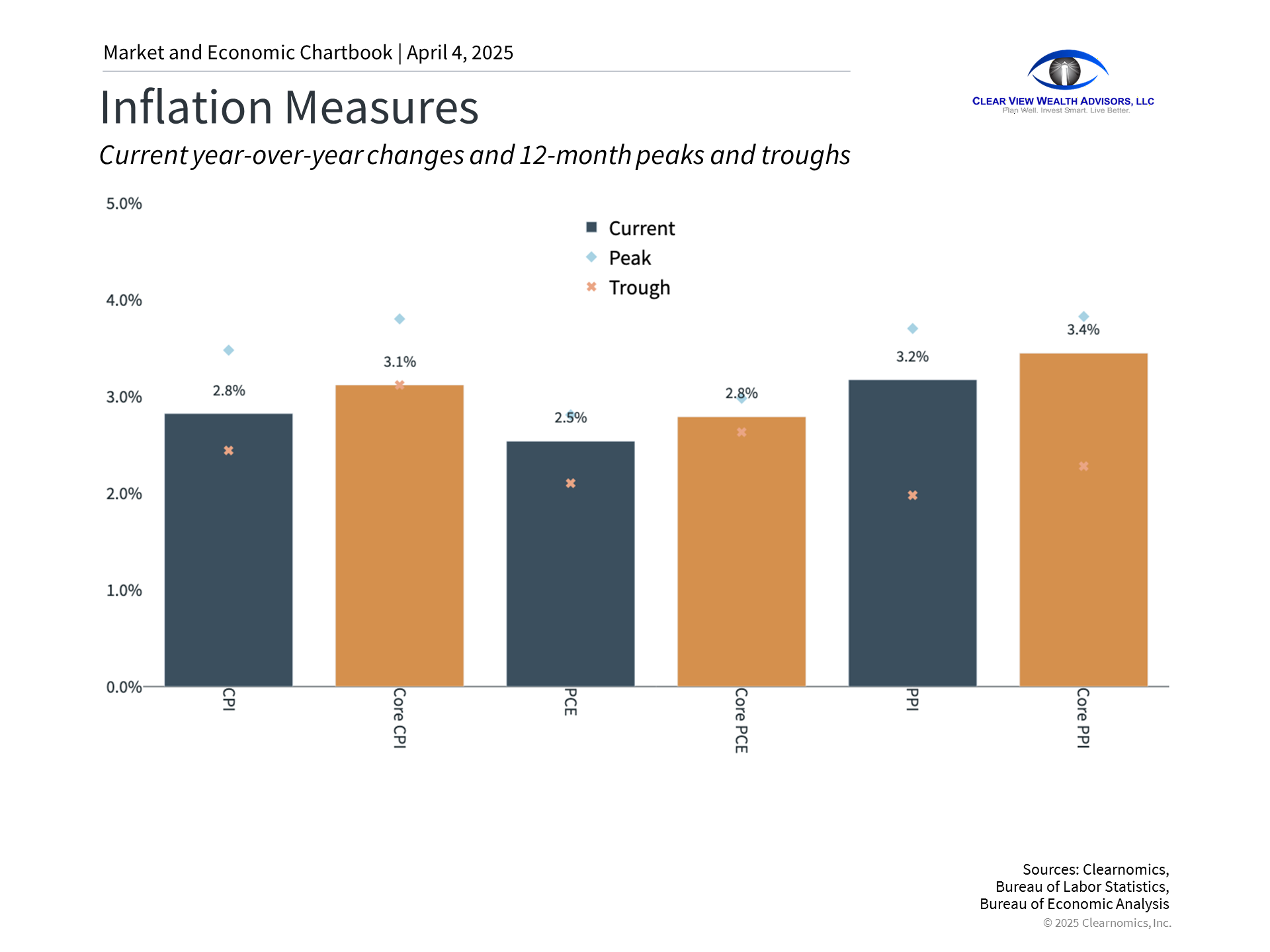 |
Inflation is a key factor that impacts interest rates, Fed policy, and the yield curve. It can increase during supply-chain interruptions including trade wars. It can decrease when supply of goods exceeds demand.
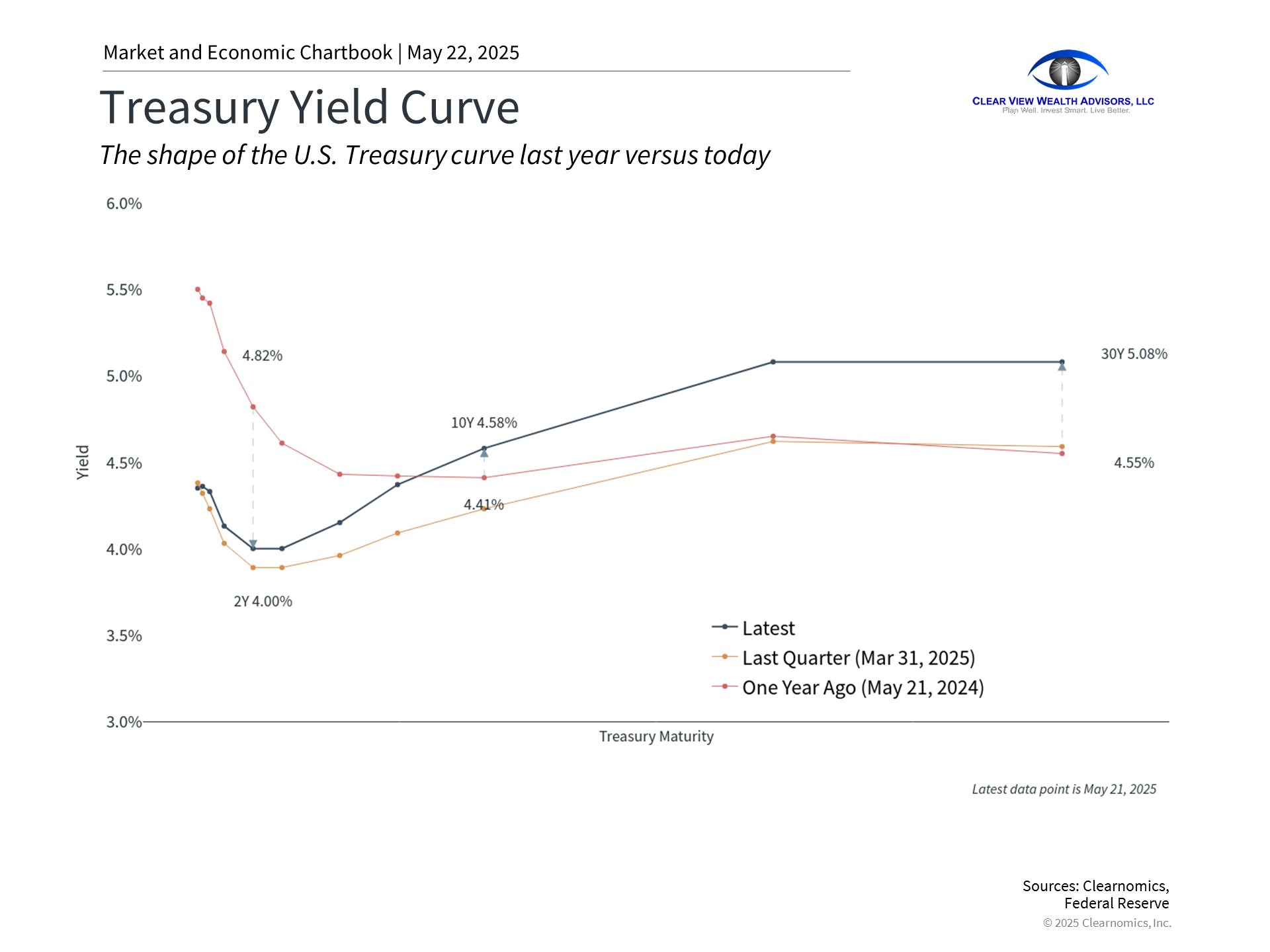 |
The US Treasury Yield Curve is another key data point used to predict recessions. When short-term rates exceed longer-term rates (typically measured by the 2Y vs 10Y Treasury), it is generally a sign that a recession is in the making typically within 18-months.
The yield curve also can show the impact of inflation and trade policy as higher rates result as both risks increase the pressure on yields.
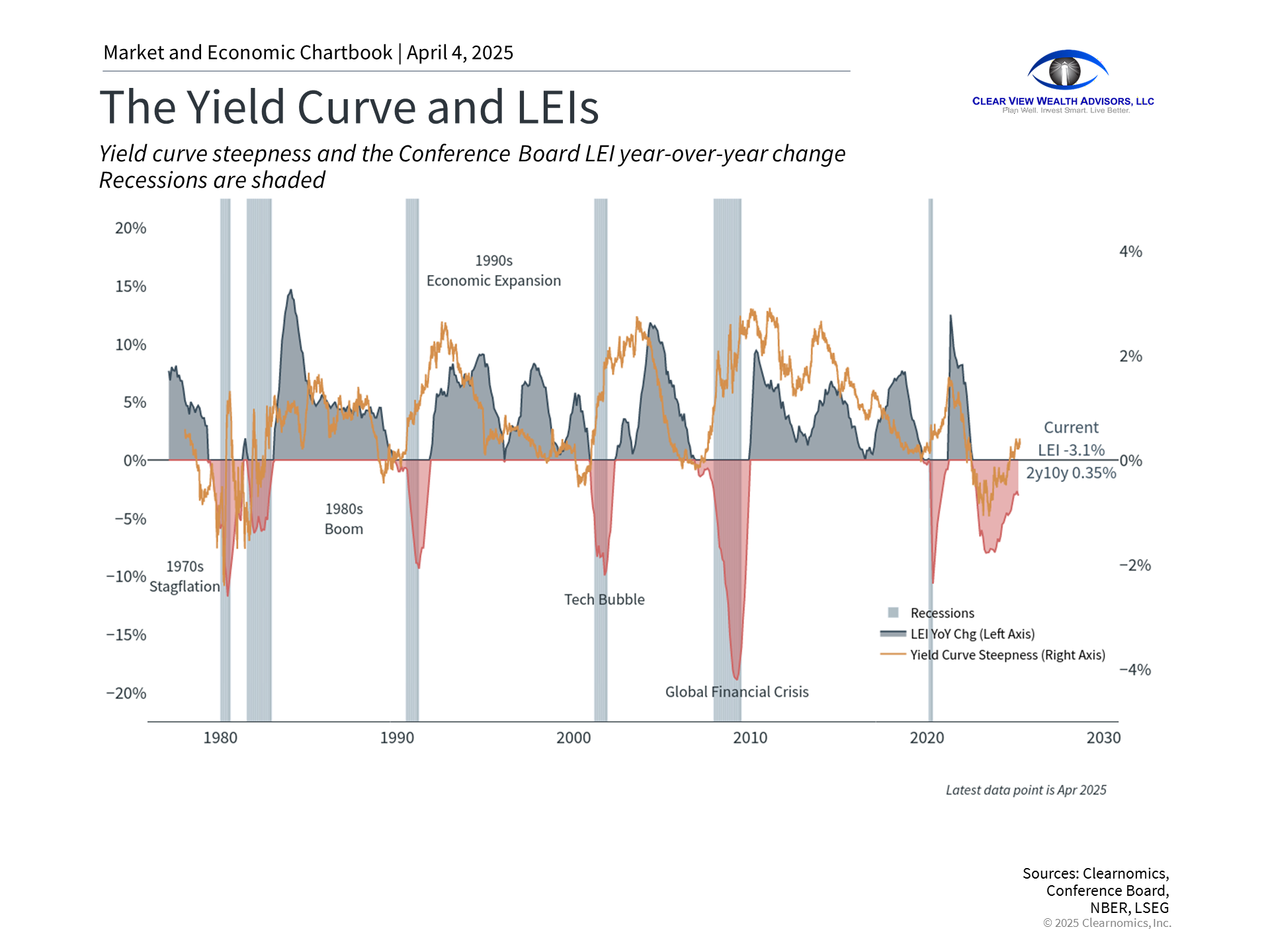 |
Generally, the Leading Economic Indicator index and yield curve will turn negative several months before a recession as the economy deteriorates. The combination of these indicators is useful in forecasting growth of the economy.
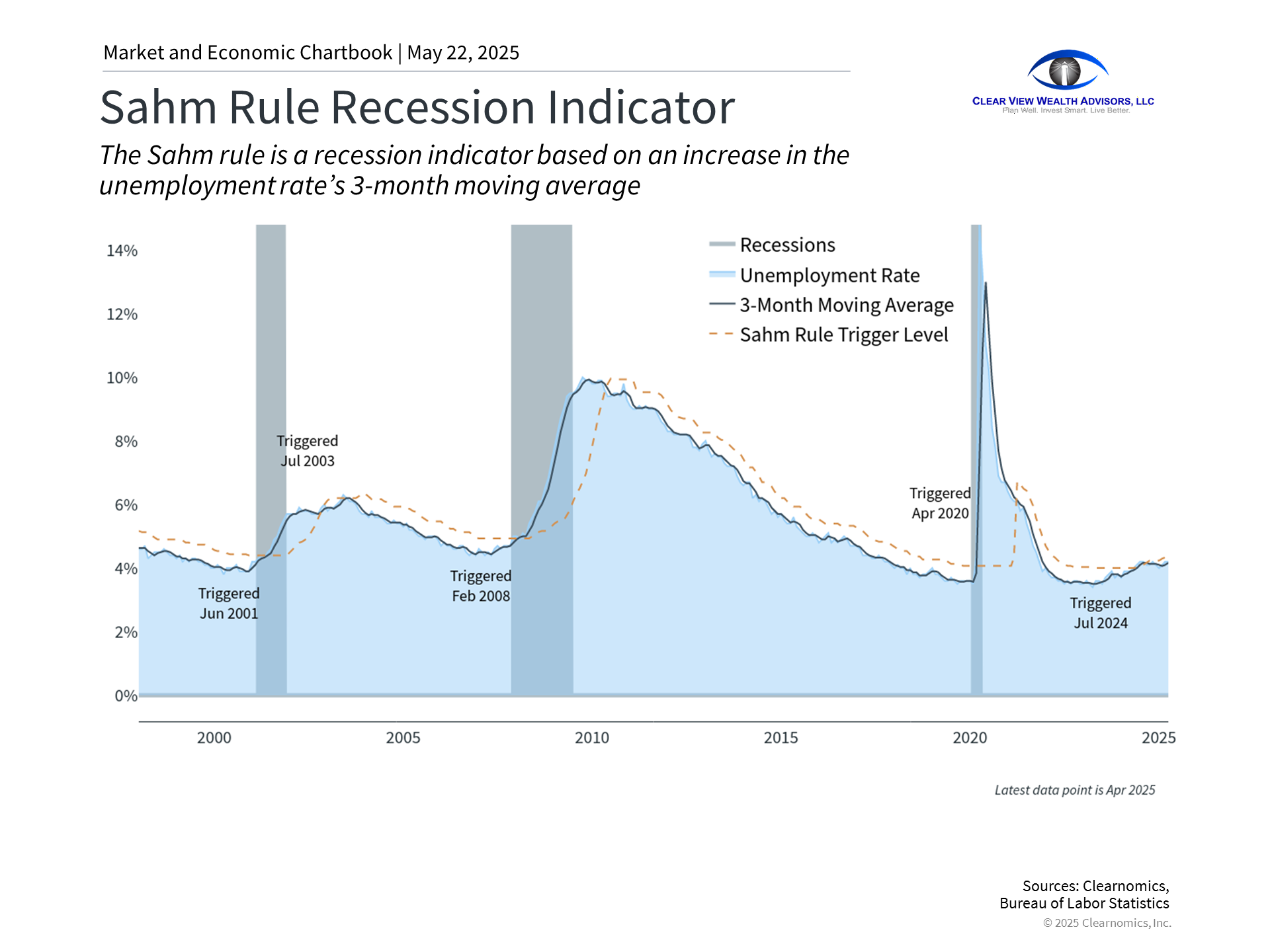 |
The Sahm Rule is a useful recession indicator based on sudden increases in the three-month unemployment average. Generally, it is a good signal when there are very sharp changes in the unemployment rate average.
While history rarely repeats, it does rhyme. While stock market returns can range, the likely returns generally fall within a normal distribution. On the positive side, the annual returns average between 10% to 30%. On the negative side, the typical annual loss ranges between 0% and -20%. As noted, the positive return years outpace the negative return years by 2:1.
Clearly, stock market volatility has increased since the beginning of 2025. Though volatility hasn't spiked to the same levels it has been in past years, the relative calm of 2024 has been replaced with more frequent gyrations in major market indices as investors respond to frequent changes in policy. While this is not an unexpected reaction, it does make investors anxious.
As noted in this chart, generally, the S&P 500 has more positive years than negative years. But that doesn't mean that there aren't intra-year declines. While the deepest intra-year decline has been more than 40%, the average over nearly 40 years is closer to 12%. The occasional decline is needed to make investment gains possible. By holding through the temporary downturns, investors don't lock in losses and have the opportunity for gains.
As noted earlier, the broad stock market generally has an annual gain though there may be intra-year losses from quarter to quarter. Here the quarterly performance of the S&P 500 is ranked since 1988.
Over time, bear markets recover. Since the timing and trajectory of recoveries are difficult to predict, it's best to maintain your strategic allocation and a reasonable amount of cash to cover anticipated needs without having to sell stocks at an inopportune time.